
Enter power systems, geography, factions and characters as structured story bible entries, reveal them volume by volume, and hide spoilers from AI.
The Pain Points of Worldbuilding
For fantasy, sci-fi and other invented-world genres, worldbuilding is the foundation of everything. But the traditional approach has two big pain points:
Pain point 1: settings scattered everywhere
Notebooks, Word files, sticky notes, your own head… the settings are spread across all of them, so you can't find them while writing and contradict yourself once you forget.
Pain point 2: AI doesn't follow the rules
Even when you explain the settings in the prompt, AI often “makes up” things that don't exist or ignores the constraints you set (such as “Golden Core stage can't fly”).
Maliang Writer's story bible system solves exactly these two problems.
Systematic Support for Setting Types
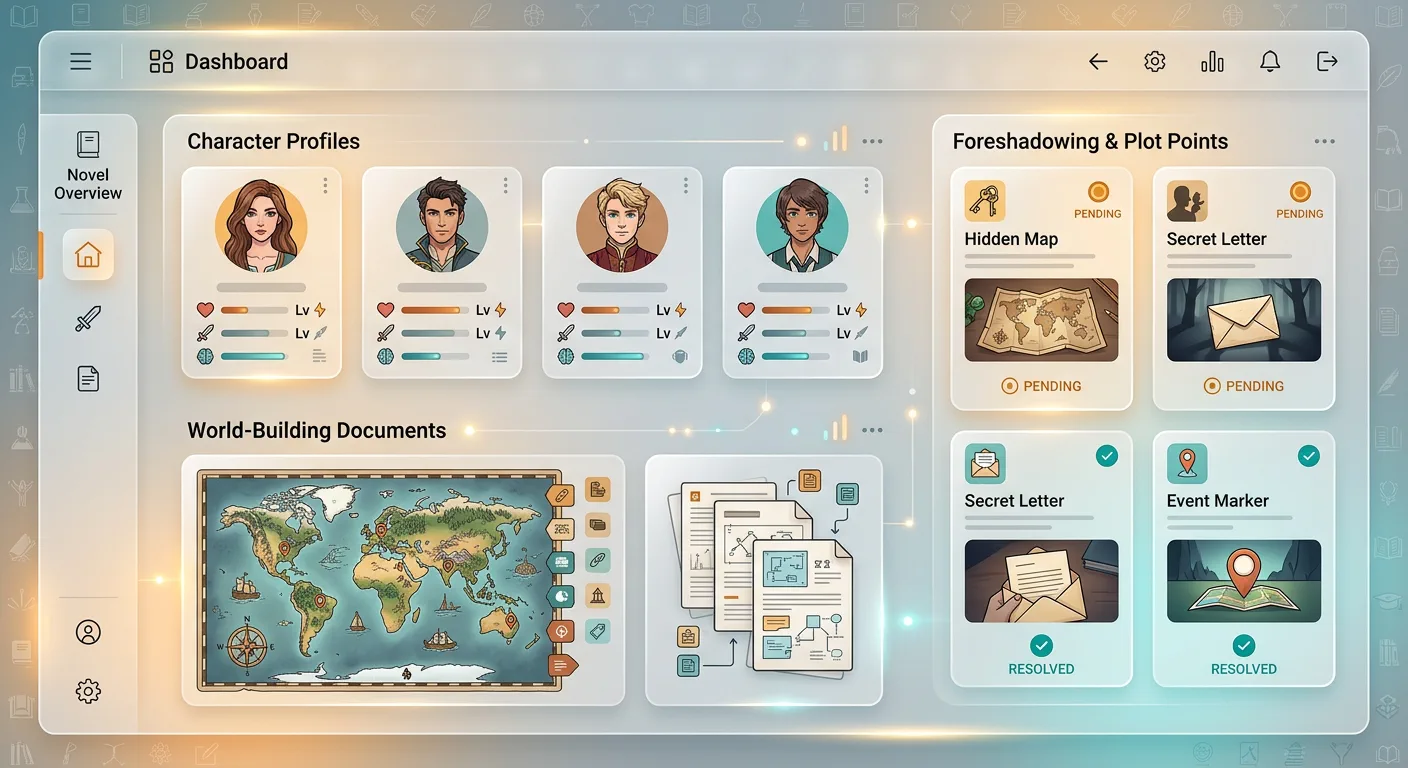
The platform comes with the setting types web novels use most, and each type has its own structured fields:
Power system
- Realm tiers (name, corresponding strength, breakthrough conditions)
- Cultivation paths (technique systems, talent categories)
- Taboos and limits (when power is reduced)
Races and civilizations
- Basic traits (appearance, lifespan, reproduction)
- Power traits (innate abilities, weaknesses)
- Cultural background (beliefs, social structure)
Geography and locations
- Positional relationships (continent map hierarchy)
- Local resources (garrisoning factions, special treasures)
- Historical events (major events that happened here)
Factions and sects
- Power structure (sect leader → elders → disciples)
- Faction analysis (internal conflicts and politics)
- Network of external relations
How Your Settings Get Used While Writing
The settings you enter are really used when the text is written:
- Given to the writer before continuing: the characters appearing in this chapter and the settings involved, along with their state as of the previous chapter, are handed to the writer together
- Character profiles written as ways of reacting: a profile doesn't just stick on labels like “calm” or “scheming”; it spells out how the character thinks and speaks when something happens, and the writer follows that for dialogue and reactions
- Changes in the text recorded in the archives: after each chapter, new changes to characters and settings in the text are recorded in the novel story archives
- Conflicts go to the author first: when the text contradicts an existing setting, the original sentence is listed and you decide which side wins; it never changes your text on its own
Examples:
- If a setting says “Golden Core stage can't fly,” the character state the writer receives includes their realm, so a Golden Core character won't be made to ride a flying sword
- Once “the Dark Iron Sword has been taken by character A” is recorded in the archives, the writer of later chapters sees A as the holder
- A rule like “Azure Cloud Sect only accepts female disciples” is handed to the writer as a setting relevant to this chapter
For long novels, we still recommend that authors do a final check of key chapters.